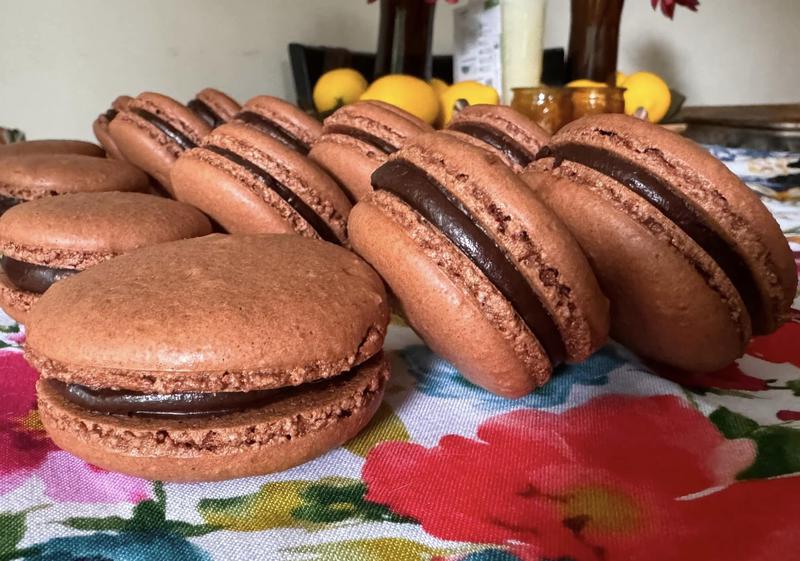
One of my favorite treats is the French Macaron. The macaron is a round, chewy, almond based cookie that is sandwiched together and filled with ganache, buttercream, caramel, fruit curds, or jams. It is the perfect treat to serve at parties, larger events, or to simply enjoy with a cup of tea or coffee.
History of the macaron dates back to the late 1400s. At the time it consisted of only a simple baked almond cookie with no filling. The cookie was popular throughout monasteries in Venice, Italy. It is believed that the cookie was brought to France by the chefs of Catherine de’ Medici, after she wed the future King of France, Henry II, in 1533. The cookie was exclusive to the wealthiest. Until the French Revolution when Sister Marguerite Gaillot and Sister Marie-Elisabeth Morlot began baking and selling the cookies.
The religious sisters sought refuge in Northeastern France after their abbey closed. They made a living by selling the macarons and became known as the Sœurs Macarons (“Macaron Sisters”). The cookie later evolved into the version we recognize today, where two cookies are sandwiched together and filled. Some claim that Chef Pierre Desfontaines created this version in 1930 at the Maison Ladurée in Paris, France.1
There are three methods to making Macarons:
-
French Method is considered to be the most basic and traditional method. It involves beating the egg whites and sugar until you create a meringue.
-
Italian Method is achieved by creating a stable meringue, where hot sugar syrup is added incorporated into the egg whites. This can be challenging due to the precise temperature that is needed for the sugar syrup.
-
Swiss Method is considered a good middle ground between the French and Italian. It is done by heating the egg whites over a double boiler. When the sugar has dissolved it is then whipped to create a stable meringue.
My favorite by far is the French Method. Head over to my recipe and give it a try.
-
[https://www.britannica.com/topic/macaron] ↩︎